The crab lived under the black rocks where the tide made a sound like someone turning pages.
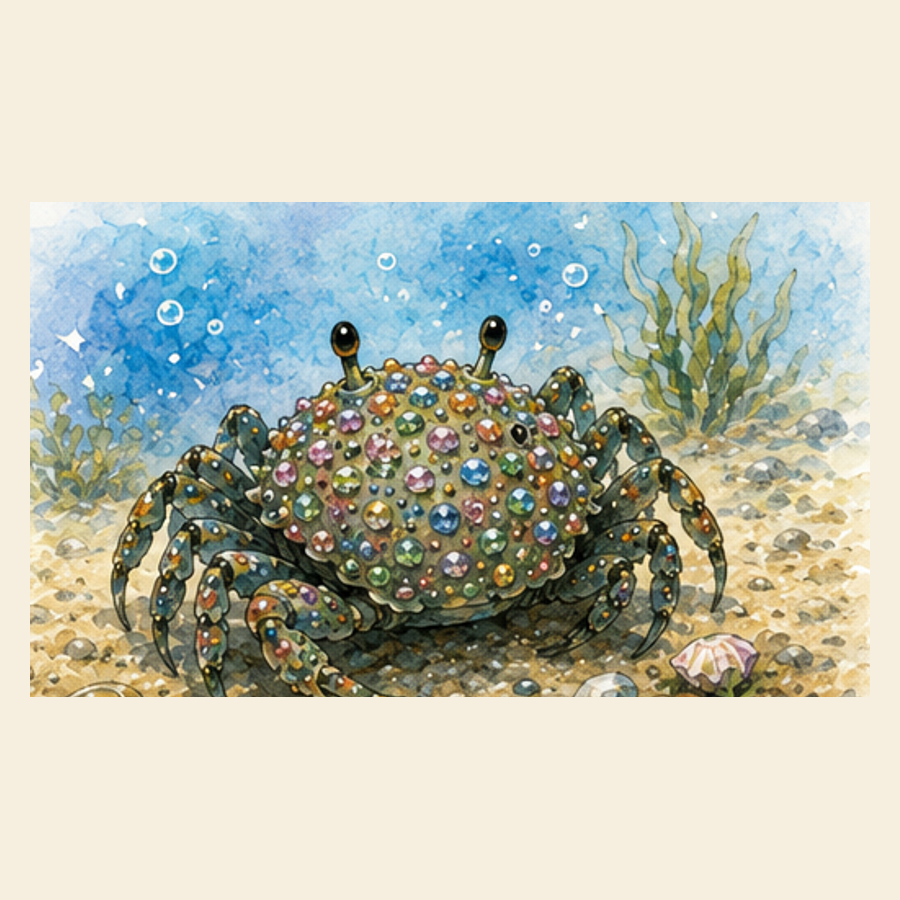
On its back, in a hollow worn smooth by years of waves, the crab carried a small jewel. It was not a treasure in the way humans used the word. It did not buy food, open doors, or make anyone bow. It simply held light. Morning light, moonlight, the green light that slipped through seawater, all of it gathered inside the stone and waited.
The girl first saw the crab after a storm.
She had come down to the shore to look for driftwood, because the island house was cold and the stove had gone out twice in the night. The beach was scattered with rope, seaweed, and shells broken into the shapes of letters. Near the largest rock, something flashed.
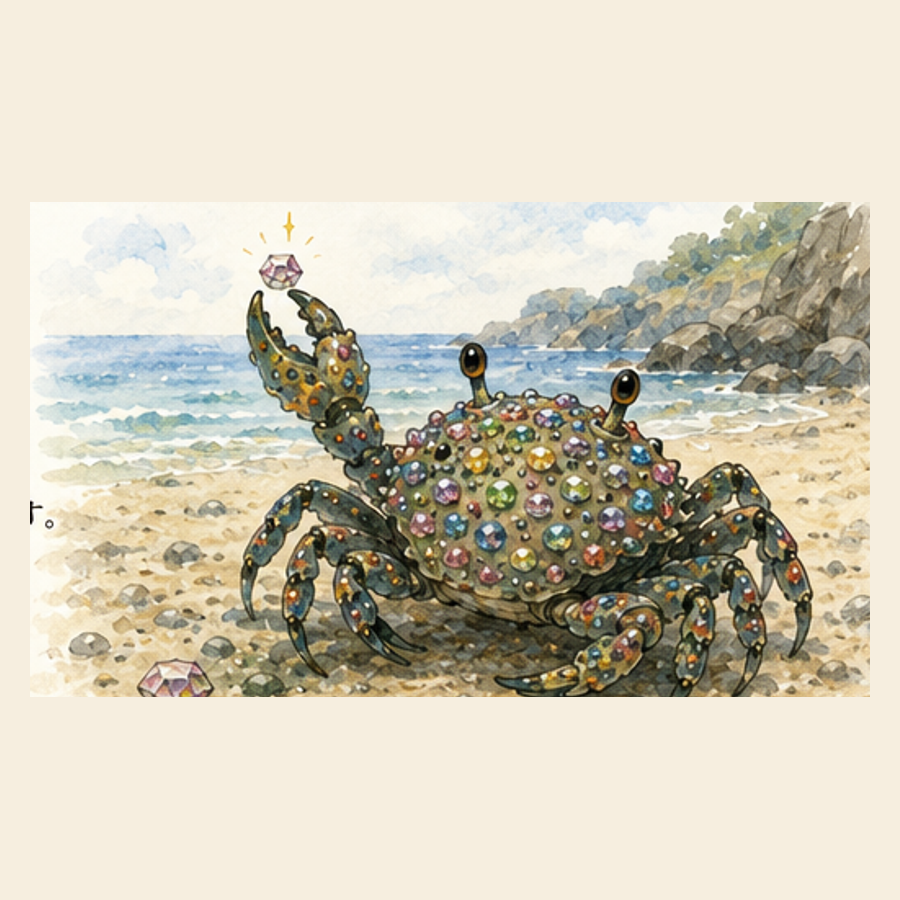
"A star," she whispered.
The crab froze.
The girl crouched and saw the tiny legs, the shell, the jewel fitted into its back as if the sea itself had placed it there. She did not reach for it. That was why the crab did not run.
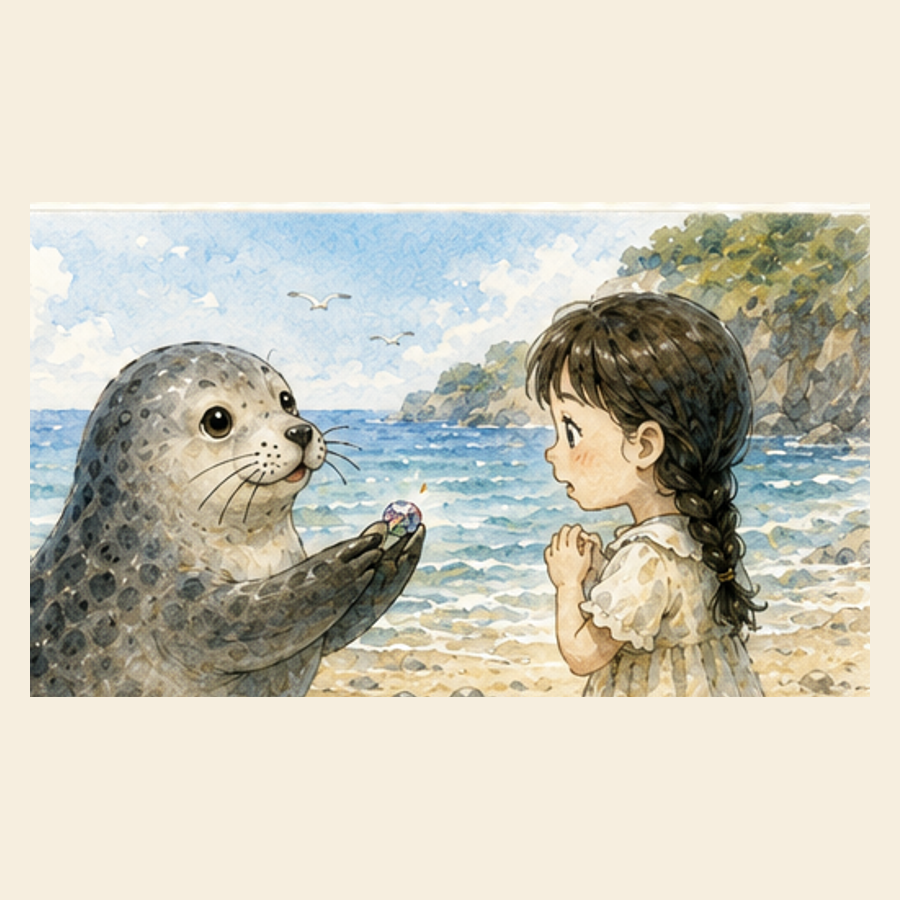
For three days the girl returned to the beach. She brought grains of rice wrapped in paper, a drop of fresh water in a bottle cap, and once, a piece of orange peel. The crab accepted nothing while she watched. Yet each morning the gifts were gone.
On the fourth day, the crab walked beside her.
It did not follow like a pet. It moved at its own pace, sideways and stubborn, stopping whenever the gulls cried. The girl understood that it was showing her something. They crossed the tide pools and climbed over stones until they reached a cave she had never noticed before.
Inside the cave were more lights.
Not jewels, exactly. Drops of mineral water hung from the ceiling and reflected the sea. Broken glass from old bottles had been polished by the tide until it looked like emeralds. In the dimness, every ordinary thing pretended to be precious.
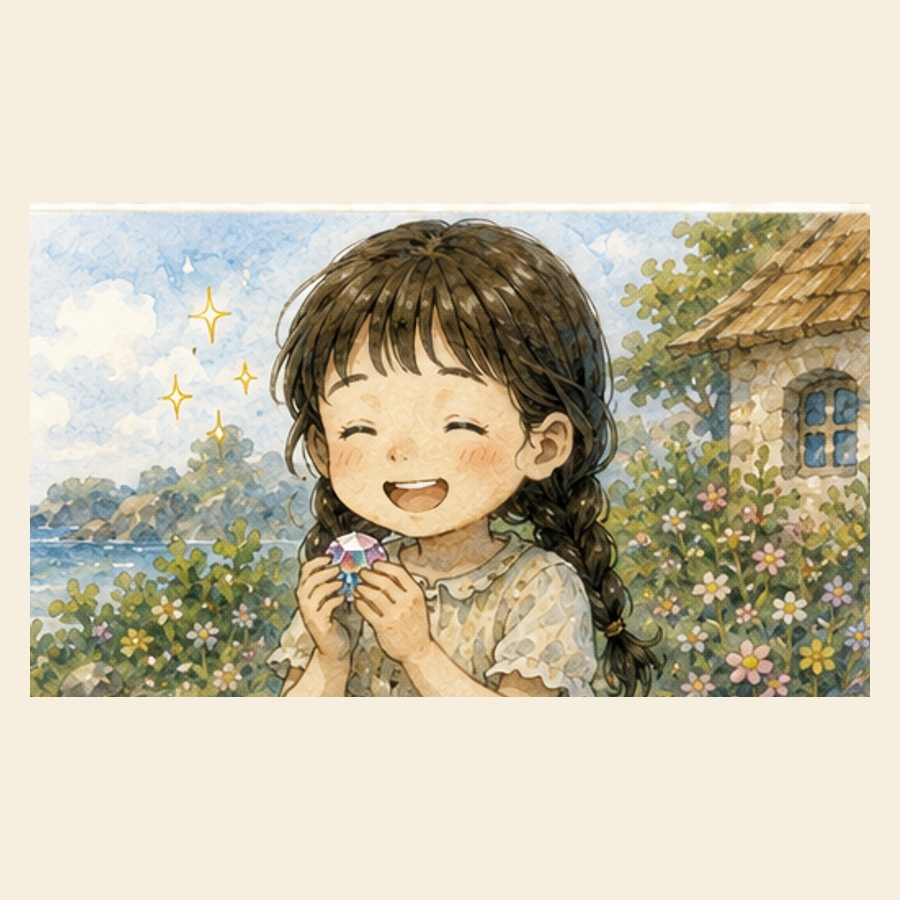
The girl laughed, and the crab tapped one claw against the stone.
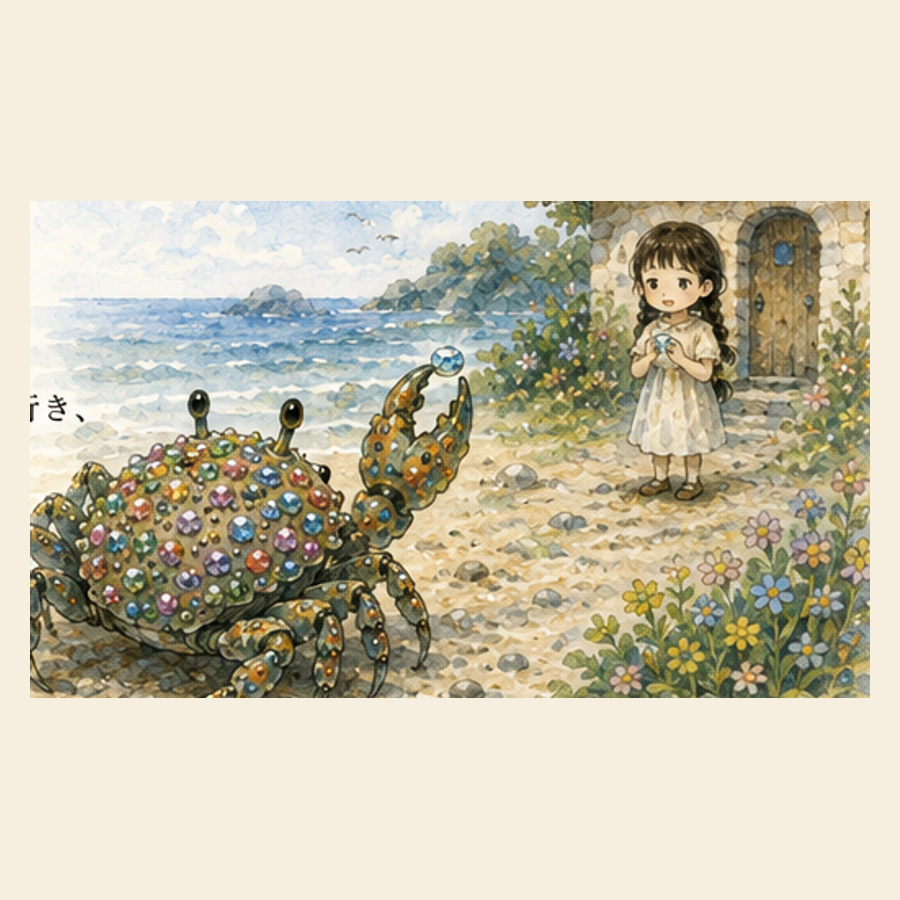
After that, she visited the cave whenever the island felt too small. She learned that the crab changed the jewel from place to place. Sometimes it carried the blue of evening. Sometimes it carried the red of a late sunset. Sometimes, after rain, it carried no color at all, only a clear brightness that made the girl think of breath.
Years later, people would ask her why she never left the island.
She could not explain it simply.
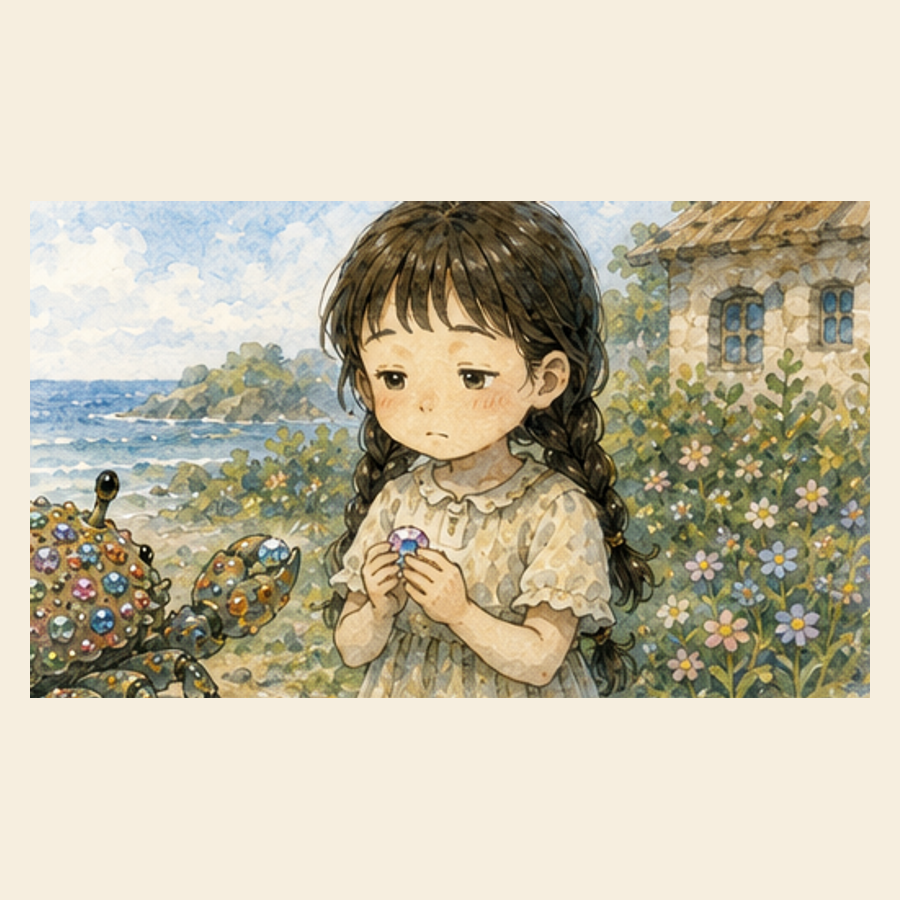
She had once found a cave where broken bottles became stars. She had once walked beside a crab that carried light without owning it. She had learned that treasure was not always something to take away.
Sometimes it was something that let you return.